













When people think of depression, they usually think of someone who is outwardly sad, crying, who has a persistent low mood, and who can’t feel joy in the things that once used to make them happy. Those interpretations aren’t wrong; they can be symptoms of depression, but depression can also surface in much more subtle ways — ones that don’t seem to include sadness at all.
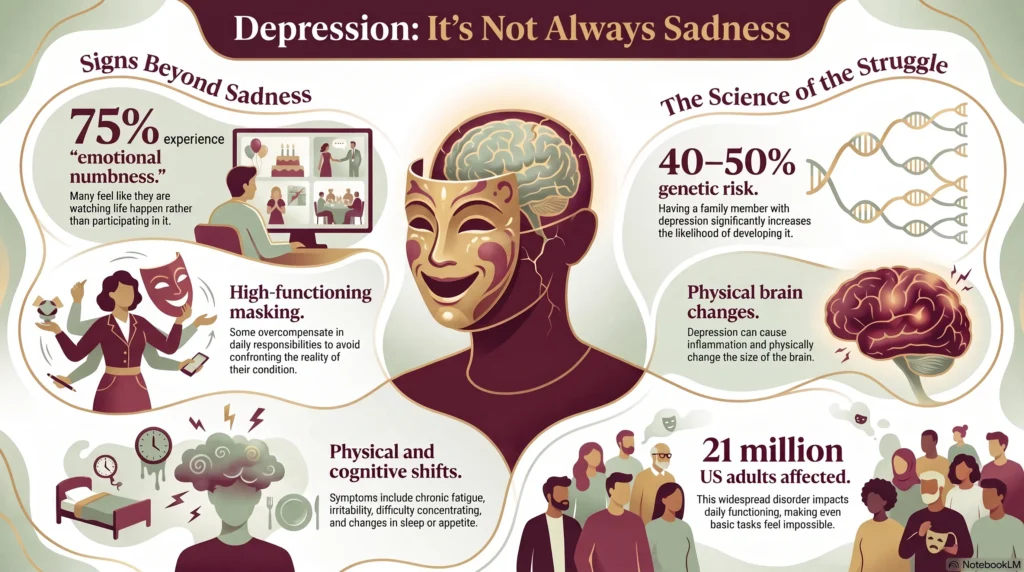
Depression is a mental health disorder that affects more people than you may realize. In the US alone, 21 million adults have had at least one major depressive episode in their lives [1]. Depression looks different for each person, and just because a person doesn’t connect to feelings of sadness doesn’t mean they’re not struggling with the condition.
In this article, I explain why you can be depressed without feeling sad, and why recognizing the lesser-known symptoms of depression is an important step toward healing.
What Is Depression?
Depression is a mood disorder that changes how you feel, think, and behave. For people with depression, basic daily functioning can be difficult. Getting out of bed, socializing, and working can feel impossible. Alternatively, people with high-functioning depression overcompensate in their daily responsibilities to avoid confronting the reality of depression.
Depression can appear as a one-off episode or repeat episodes throughout your life. Depression also physically changes the brain size and inflammation in the brain, and the more depressive episodes a person has, the more the brain is changed [2].
In whatever form it appears, depression requires treatment.
Causes of Depression
There’s no single cause of depression. Genetics, environmental factors, and physical health can all contribute to depression, as well as increase your likelihood of developing it.
Studies suggest that around 40–50% of the hazard of developing depression is genetic [3]. If you have a family member who suffers from depression, you are more likely to as well. Life events such as grief, stress, and conflict can also affect your mental health and make you more vulnerable to depressive episodes. Poor physical health, addiction, and pre-existing conditions may raise your risk of depression too.
All of this is to say that feeling sad is not always a prerequisite nor an outcome of depression. A person who is stressed and whose parent has depression may not necessarily associate sadness with their own encounter with depression.
What Are Signs of Depression Beyond Sadness?
Ongoing sadness can certainly be one of the signs of depression, but many more symptoms exist and are diverse. They include:
- Feeling worthless or guilty
- Trouble thinking and concentrating
- Irritability
- Difficulty making decisions
- Changes in appetite
- Sleeping too much or too little
- Slowed movements and speech
- Fatigue
- Sexual dysfunction
- Anxiety
- Emotional numbness
- Suicidal thoughts
While pervasive low mood is one of the most common signs of depression, research shows that so is anhedonia (reduced ability to feel pleasure), fatigue, anxiety, and sexual dysfunction [4].
Emotional Numbness and Depression
It’s not just possible to be depressed without feeling sad, it’s possible to be depressed without feeling anything. Emotional numbness describes when someone cannot feel or express their emotions, usually because of an unconscious protective block.
People with emotional numbness report feeling like they are watching their life happen, rather than participating in it. Most people experience temporary emotional numbness at some point, which doesn’t automatically signal depression.
However, emotional numbness is a key symptom of depression, and one study found that nearly three-quarters of people in the acute phase of depression reported having severe emotional blunting. One-quarter of people in remission reported the same numbness [5].
What Is High-Functioning Depression?
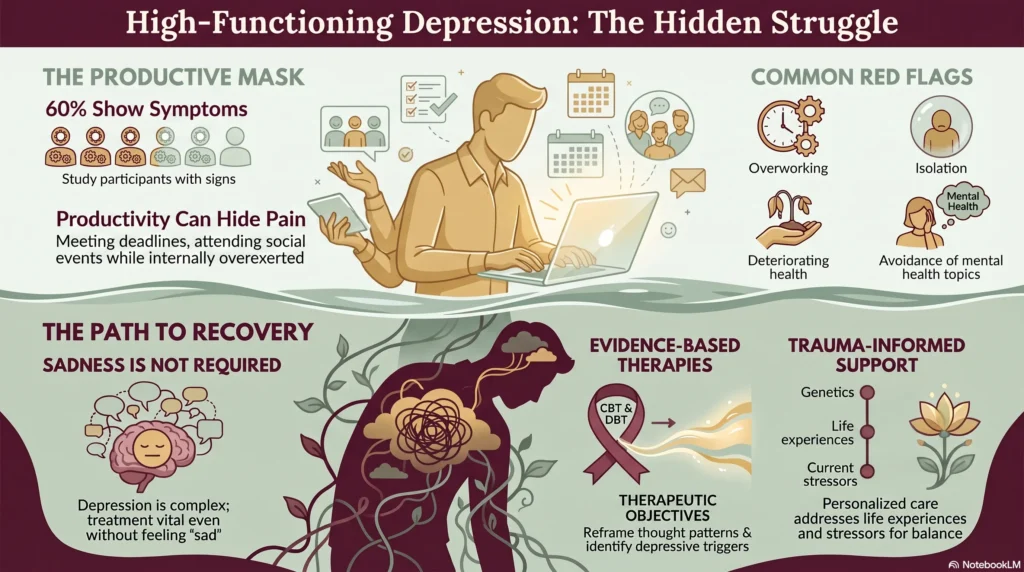
Another possible way to experience depression without sadness is via high-functioning depression. It’s not a formal diagnosis, but refers to people who are depressed but still appear productive and put together. The exact figures for high-functioning depression aren’t known, but one study found 60% of participants showed signs of high-functioning depression, while 14% demonstrated very high-functioning depression [5].
High-functioning depression is difficult to detect because the person may intentionally mask their symptoms, or they may be in denial that they have symptoms at all. They often meet deadlines, attend social events, and appear to genuinely manage things well. Below the surface, though, they are overexerting themselves and are struggling.
Signs of high-functioning depression include:
- Avoiding topics around mental health
- Isolating
- Overworking
- Deteriorating health
- Low self-esteem or highly critical
- Emotional outbursts
- Using substances
Does Depression Without Feeling Sad Still Require Treatment?
Yes, while sadness often feels like the most important emotion that needs treatment, depression is much more complex than sadness. Whether you display sadness or not, if you suspect that you’re depressed, treatment can help you find healthy coping mechanisms, address underlying trauma, and heal on a more profound level.
Humans are complex, and emotions such as anger or guilt can all be different manifestations of depression. Likewise, avoidance or addiction can be behaviors that substitute sadness in depression.
Structured treatment is effective for depression, however it presents. In particular, psychotherapy and medication have been proven to improve high-functioning depression symptoms and people’s quality of life [6].
Evidence-based therapies such as Cognitive Behavioral Therapy (CBT) and Dialectical Behavioral Therapy (DBT) can help you identify and reframe shifts in your behaviors and thought patterns. They can also guide you to recognize triggers that spark depressive episodes.
Medications such as selective serotonin reuptake inhibitors (SSRIs) can regulate your brain chemistry and improve your emotion regulation. Wellness activities target the somatic symptoms of depression and contribute to better physical health and mindfulness.
Tailored Treatment for Your Experience of Depression at Colorado Mental Health Services
Our trauma-informed outpatient program is designed to treat depression and other mental health disorders. We support you to connect with yourself and the world in the healthiest possible way, considering how your life experiences, genetics, and current stressors may be contributing to depressive episodes. We don’t judge, and we don’t apply preconceived notions of what depression is or should be.
Our team of licensed clinicians personalize all care around your needs, looking at how depression takes shape for you, and how treatment can be delivered for the best outcomes. Our program integrates evidence-based therapies, medication management, and holistic activities to ensure that you feel balanced inside and out.
We’re based in Lakewood, a short drive away from Denver and surrounded by the beautiful Front Range mountains.
Healing is possible. It can start with a phone call. Speak with our admissions team today.

Sources
[1] National Institute of Mental Health. (July 2023). Major Depression. nimh.nih.gov.
[2] WedMD. (August 2024). Physical Effects of Depression on the Brain. webmd.com.
[3] Alshaya, D. (May 2022). Genetic and epigenetic factors associated with depression: An updated overview. Saudi Journal of Biological Sciences.
[4] Kennedy, S. (September 2008). Core symptoms of major depressive disorder: relevance to diagnosis and treatment. Dialogues in Clinical Neuroscience.
[5] Joseph, J. et al. (February 2025). Understanding High-Functioning Depression in Adults. Cuerus.
[6] Kamenov, K. (October 2016). The efficacy of psychotherapy, pharmacotherapy and their combination on functioning and quality of life in depression: a meta-analysis. Psychological Medicine.