
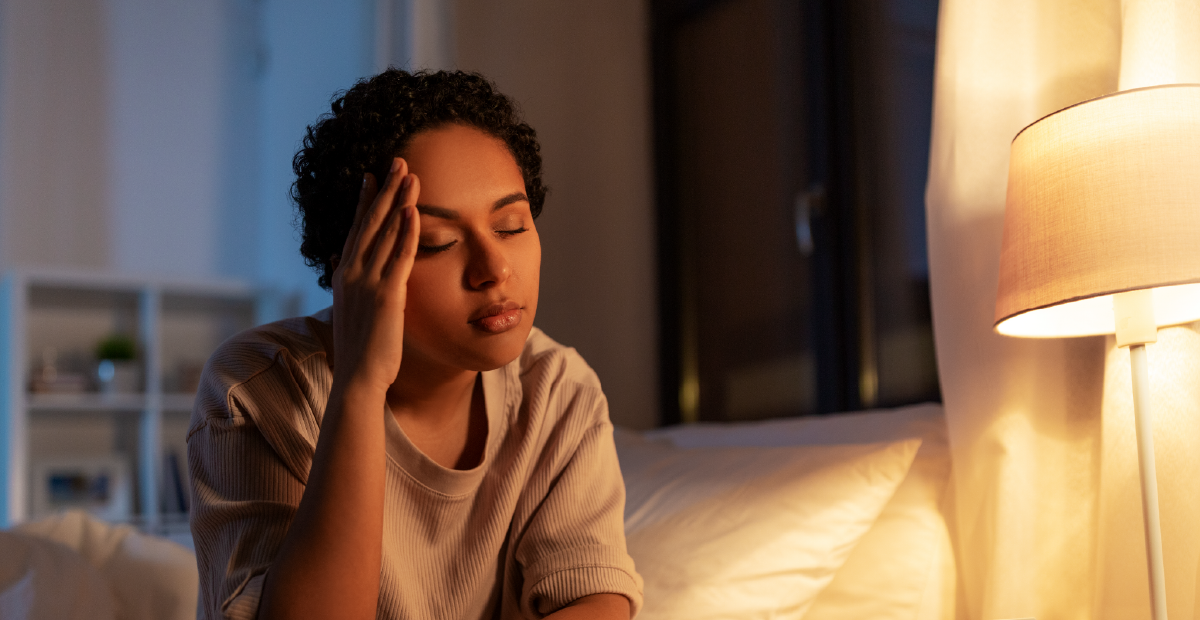












Fewer distractions and high stress hormone levels can make anxiety feel worse at night. In reality, nighttime can be the perfect storm for anxiety to brew and feel more intense. 1 in 6 adults in the US has an anxiety disorder [1]. In recent years, reports of anxiety have increased substantially, particularly post-pandemic and among young people who are facing global uncertainties.
Sleep has been proven to help reduce anxiety [2]; however, people with anxiety often say that the evening is when their anxiety feels most severe. Here’s why, what can help, and when seeking treatment is a good idea.
Reasons Why Anxiety Seems Worse At Night
Anxiety is an emotion characterized by worry, tension, and physical manifestations such as increased blood pressure. Anxiety is a natural emotion in humans that happens occasionally.
Anxiety disorders are intense, regular episodes of fear and terror that can develop into panic attacks. Anxiety disorders include general anxiety disorder, social anxiety, and separation anxiety.
Both anxiety and anxiety disorders can worsen at night. The main reasons are:
- Lack of distractions
- Increased levels of cortisol
- Fatigue
During the day, most people are mentally occupied. Work, family, and responsibilities keep our minds distracted, and so even if anxiety is present, it doesn’t feel as intrusive. Think of it like a person on a theater stage who doesn’t have the spotlight shining on them.
When we go to bed and our environment is much calmer, our minds have more time and space to wander. Anxiety can start to build or feel more severe because we can overthink and ruminate. The person on the stage suddenly has the spotlight on them.
Additionally, cortisol (the stress hormone) normally lowers at night to help us enter into a relaxed state before sleeping. People with anxiety, though, can experience disrupted or dysregulated cortisol patterns and may have higher levels in the evening. As a result, they feel restless and more anxious.
Fatigue comes into the picture, too. We’re usually tired by nighttime, and exhaustion can lower our emotional defenses. We can therefore be more sensitive to anxious thoughts and feelings and perceive that anxiety is more intense at this time.
Sleep disorders such as insomnia are common among people with anxiety [3]. Meanwhile, disturbed sleep increases the chance of developing an anxiety disorder [4].
Who Is Most Prone To Nighttime Anxiety?
Anyone can experience anxiety during the day or at night. But there are some factors that influence the likelihood of feeling anxiety more strongly at night. These include having:
- An anxiety or an anxiety disorder
- A mental health disorder
- A sleep disorder (e.g. narcolepsy, sleepwalking)
- PTSD
- Hormonal changes (e.g., women during menstruation)
- An irregular sleep pattern
- Caffeine later in the day
- Using blue-light technology before bed
There are also factors that increase the likelihood of having anxiety. These are primarily [1]:
- Genetics: Having family members with anxiety disorders
- Environment: Experiencing a traumatic event, such as abuse, grief, or illness
What Are The Health Effects Of Night Anxiety?
Anxiety at night can cause a vicious cycle where racing thoughts prevent you from sleeping. Poor sleep then leads to greater emotional dysregulation and an increased risk of developing an anxiety disorder. In fact, a study from UC Berkeley found that a sleepless night can trigger up to a 30% rise in anxiety levels [5].
Anxiety at night can have short- and long-term consequences. Some of the short-term effects are:
- Shallow breathing
- Impaired concentration
- Decreased short-term memory recall
- Irritability
- Nervousness about sleeping
More serious long-term health effects include an increased risk of [6]:
- Irregular heartbeat
- Obesity
- Diabetes
- Heart disease and heart failure
- Heart attack
- Stroke
Studies also show that sleep deprivation can increase a person’s susceptibility to stress and depressive symptoms [7].
What Can Help Reduce Anxiety At Night?
There are steps that can help alleviate night anxiety. Even if you don’t suffer from anxiety, these steps are an important part of a healthy sleep schedule and can lower the risk of experiencing sleep deprivation.
| Don’ts | Dos |
| Drink before bed, particularly alcoholic drinks | Meditate or listen to calming music |
| Consume caffeine after 2pm | Go to bed and wake up at the same time every evening |
| Watch TV or work in bed | Keep your sleeping space clean, comfortable, and quiet |
| Use phones, computers or other electronics in bed | Set a goal to sleep at least 7 hours every night |
| Have a large meal before sleeping | Exercise in the day but leave 2 hours before finishing and trying to sleep |
Research highlights that improved sleep hygiene is directly correlated to lower levels of anxiety and improved mental health [8].
When Should I Seek Treatment For Night Anxiety?
Night anxiety is common, but if it persists, it can be debilitating or perhaps signal a deeper physical or mental health issue. If night anxiety hinders your daily functioning or lasts for weeks, it’s worth speaking to a medical professional. Other signs that you may need treatment are if you:
- Are sleep deprived for more than 3 nights a week
- Have serious difficulties focusing during the day
- Have severe mood swings
- Have panic attacks or vivid nightmares
- Have trouble controlling negative thoughts
- Are using medication or other substances to fall asleep
Treatment for anxiety — including night/sleep anxiety — is accessible and effective. Options range from Cognitive Behavioral Therapy (CBT) to Acceptance and Commitment Therapy (ACT) and sleep anxiety medication. Holistic treatment is also available and can be integrated into evidence-based approaches.
Night anxiety should receive comprehensive treatment that looks at broader physical and mental health symptoms. Anxiety can be complex and have surprising roots, but it can be reduced and successfully managed.

Anxiety Treatment at Colorado Mental Health Services
At Colorado Mental Health Services, we believe that everyone deserves high-quality mental health care. Our programs are delivered by a team of licensed professionals who offer expert care to those experiencing anxiety and other mental health disorders. We operate with empathy and professionalism and personalize all our programs to each person’s needs.
We use evidence-backed therapies such as Cognitive Behavioral Therapy (CBT) and Dialectical Behavioral Therapy (DBT) alongside wellness activities to help people heal. We don’t discriminate, and we respect people’s privacy at all times.
Our treatment center is located in Lakewood, CO, and has secure, comfortable state-of-the-art facilities.
Take the first step to stability. If you or someone else is showing signs of anxiety, speak with our admissions team.
Sources
[1] National Alliance on Mental Illness. (May 2026). Anxiety Disorders. nami.org.
[2] Chellapa, S. Aeschbach, D. (December 2021). Sleep and anxiety: From mechanisms to interventions. Sleep Medicine Review.
[3] Staner, L. (September 2003). Sleep and anxiety disorders. Dialogues in Clinical Neuroscience.
[4] Xue, Y. (August 2025). Sleep disturbances in generalized anxiety Disorder: The central role of insomnia. Sleep Medicine. Volume 132.
[5] Anwar, Y. (November 2019). Stressed to the max? Deep sleep can rewire the anxious brain. Berkeley News.
[6] Cleveland Clinic. (December 2024). Sleep Anxiety.
[7] Shah S., et al. (May 2025). Effects of Sleep Deprivation on Physical and Mental Health Outcomes: An Umbrella Review. American Journal of Lifestyle Medicine.
[8] Scott, A., et al. (December 2021). Improving sleep quality leads to better mental health: A meta-analysis of randomised controlled trials. Elsevier.