













A panic attack isn’t the sensation you feel when you watch a scary movie or are on a rollercoaster. It’s a physiological response that can seem genuinely life-threatening, although it isn’t.
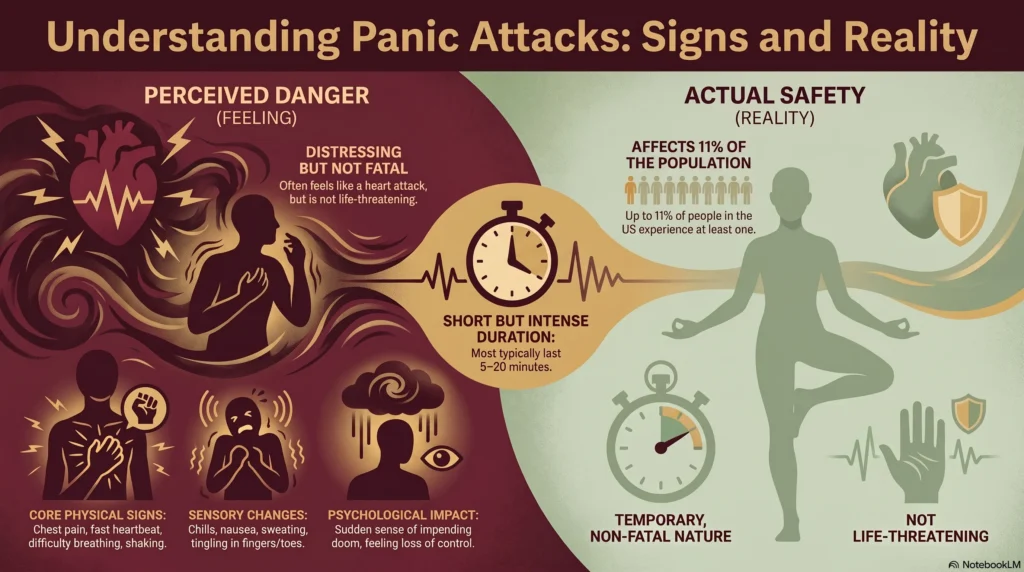
Up to 11% of people in the US experience at least one panic attack in their lifetime [1]. For most people, a panic attack arrives, passes, and doesn’t return or isn’t frequent enough to disrupt their functioning. For others, panic attacks can become a daily experience and can be overwhelming. In these cases, the person likely has a panic disorder — a mental health condition that often requires more structured treatment than just weekly therapy.
Let’s explore what a panic attack is, when it requires clinical support, and how to access the right level of care.
What Is a Panic Attack?
A panic attack is a sudden onset of fear and anxiety, or a strong sense of danger that arises in an ordinary, non-threatening situation. It can trigger physical sensations and is very distressing for the person having the panic attack. It typically lasts between 5-20 minutes.
People who have had panic attacks report feeling like they are losing control, having a heart attack, or dying. Panic attacks, however, are not fatal.
Signs of a Panic Attack
Panic attacks can take place out of the blue, with no apparent trigger. Many people have had panic attacks doing everyday tasks such as going to the supermarket, doing laundry, or while driving.
Panic attacks look different for each person, but common symptoms include:
- Chest pain
- Fast heartbeat
- Difficulty breathing
- Shaking
- Chills
- Nausea
- Sweating
- Tingling in fingers and toes
- Sense of impending doom
- Derealization or depersonalization
Why Do Panic Attacks Happen?
It’s not known what causes panic attacks. Some experts suggest that dysfunction in the amygdala, the area of the brain that processes fear and other emotions, may play a role [2]. Chemical imbalances in neurotransmitters such as serotonin, dopamine, and gamma-aminobutyric acid (GABA), may also be responsible [3]. Further research is still needed to confirm the exact reason(s).
The triggers of panic attacks can be varied and have no connection to the person and their experiences. Alternatively, people who have phobias may have a panic attack when exposed to their fear. For example, someone who is scared of spiders (arachnophobia) may begin to have a panic attack after seeing a spider in the house.
Having a random panic attack or very dispersed one or two panic attacks can warrant seeking weekly therapy. It’s always good to dive into changes in psychological responses and what drives them.
What Is Panic Disorder?
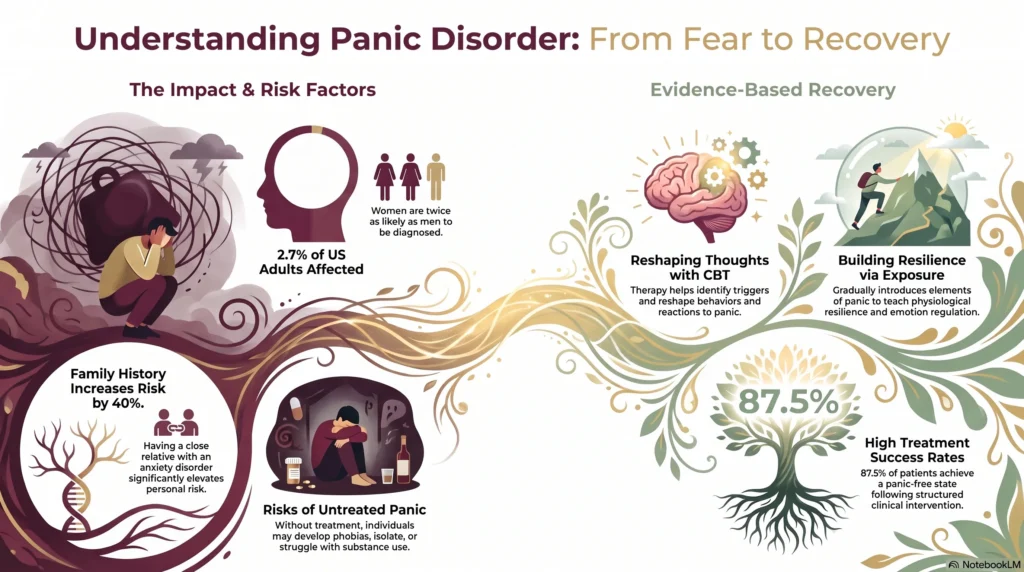
Panic disorder is a type of anxiety disorder that’s characterized by regular panic attacks that don’t have a clear trigger. It also involves a deep fear of having panic attacks. 2.7% of adults in the US have panic disorder, and women are twice as likely to have panic disorder than men [4].
Having panic attacks does not mean that a person will develop panic disorder. But factors that increase the likelihood of having panic disorder include:
Family history. If parents, siblings, or children have an anxiety disorder, the risk of developing panic disorder increases by 40% [1].
Mental health. People with anxiety disorders, depression, and other mental health disorders are more prone to panic attacks.
Early-age trauma. Traumatic events that occur when someone is aged 1-17 can contribute to panic disorder.
Panic disorder requires more than weekly therapy; it needs structured treatment, especially if it affects a person’s daily functioning. If left untreated, panic attacks can get worse, and quality of life can suffer. Some possible risks associated with panic disorder include:
- Developing phobias that limit functioning (e.g., leaving the house)
- Isolating
- Seeking constant medical care
- Problems at work or school
- Depression and other psychiatric disorders
- Alcohol and substance use
Effective Treatment for Panic Disorder
It’s possible to recover from panic disorder. One study found that after treatment, 87.5% of patients had no panic attacks and 33% were in full remission [5].
Most treatment integrates evidence-based therapies such as Cognitive Behavioral Therapy (CBT) and Exposure Therapy. CBT helps to identify patterns in when panic attacks surface, and helps individuals to reshape their thoughts, behaviors, and reactions. CBT has been found particularly effective in terms of symptom reduction and increased well-being [6].
Exposure therapy gradually introduces someone (mentally or physically) to the elements that lead to their panic attacks. It teaches physiological resilience and emotion regulation.
Medication can be used in tandem with therapy, including antidepressants and anti-anxiety medications. These can help lower the frequency and severity of panic attacks. However, medication alone is not sufficient to treat the root of a panic disorder. You can learn more about our approach through our medication management services.
Alternative therapies have also shown traction in treating panic disorder. Transcranial magnetic stimulation (TMS) and vagus nerve stimulation (VNS) all broaden treatment options for people suffering from panic disorder. Mindfulness has also been documented as having significant therapeutic potential [7].
Begin Healing at Colorado Mental Health Services
If you’re having panic attacks every day, you could have panic disorder. You don’t need to struggle alone. Our trauma-informed outpatient program takes place in a safe environment where you can calm your nervous system.
Our center is based in Lakewood, a short drive away from Denver, and is surrounded by the beautiful Front Range mountains. We also have virtual options for people who are unable to visit us in person.
We use evidence-based therapies, medication, and holistic activities to help you achieve stability and confidence. We also encourage you to build communities that maintain your sense of balance during, and beyond, treatment.
Things can be better. It can start with a phone call. Speak with our admissions team today.

Sources
[1] Cleveland Clinic. (2023). Panic Attacks & Panic Disorder. my.cleveland.clinic.org.
[2] Feinstein, J. et al. (2013). Fear and panic in humans with bilateral amygdala damage. Nature Neuroscience.
[3] Carvalho Natal Moraes, A. et al. (2024). Neurochemical and genetic factors in panic disorder: a systematic review. Translational Psychiatry.
[4] National Institute of Mental Health. Panic Disorder. nimh.nih.gov.
[5] Swoboda, H. et al. (2003). The long-term course of panic disorder—an 11 year follow-up. Journal of Anxiety Disorders.
[6] Papola, D. et al. (2020). Which psychotherapy is effective in panic disorder? And which delivery formats are supported by the evidence? Study protocol for two systematic reviews and network meta-analyses. BMJ Open.
[7] Antos, Z. et al. (2024). Beyond Pharmacology: A Narrative Review of Alternative Therapies for Anxiety Disorders. Diseases.